The Price of Genius: Amy Winehouse – The Diva and Her Demons (Review)
There's a particular kind of silence that falls when someone tries to sing an Amy Winehouse song. It's not quite anticipation, though there's some of that. It's more like a collective holding of breath, because we all know that voice. That scratchy, soulful, utterly unmistakable instrument that could swing from jazz-club intimacy to raw emotional devastation in a single phrase. You can't fake it. You can only honour it.
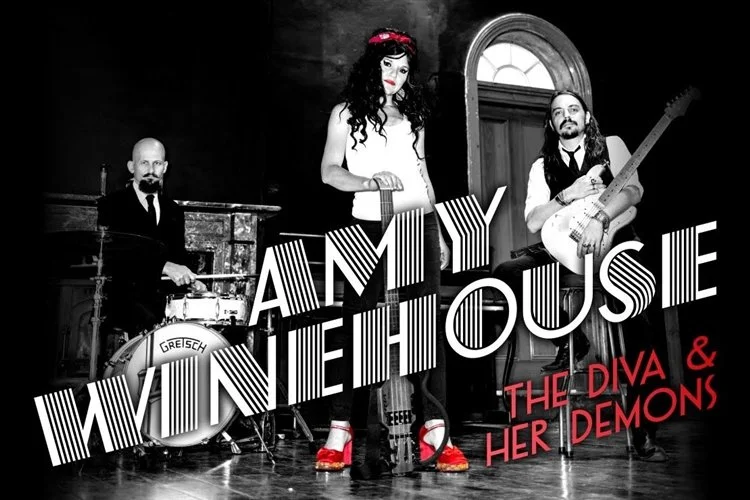
That's exactly what Kerry Hiles and her talented ensemble set out to do at Theatre on the Square with Amy Winehouse – The Diva and Her Demons, and for the most part, they succeed in capturing something more elusive than mere imitation: the spirit of why we fell in love with Amy's music in the first place.
Fifteen years have passed since we lost Amy Winehouse at just 27 years old, yet her legacy refuses to fade quietly into the archives of pop history. This production marks that anniversary with a stripped-back acoustic arrangement (just vocals, bass, guitar, and drums) that forces the music to stand on its own merits. No studio polish. No backing tracks. Just three musicians in an intimate theatre space, channeling the groove and soul that made songs like "Rehab," "Back to Black," and "Valerie" so irresistible.
Hiles takes on the dual role of narrator and performer, weaving between telling Amy's story and embodying her voice. It's a delicate balance, and while the vocal performance doesn't always reach the heights that die-hard fans might hope for (Amy's voice was, after all, lightning in a bottle) there's a sincerity to the effort that matters. This isn't about slavish impersonation. It's about remembrance.
What truly anchors the evening is the musicianship. Hiles' bass guitar work is exceptional, providing a rhythmic foundation that pulses with the same infectious energy that made Amy's music so hard to resist. Drummer Kristo Zondagh delivers a thoroughly entertaining performance, his versatility across genres evident as he navigates the ska-inflected beats of "Rehab," the smoky slow-burn of "Back to Black," and everything in between. He's the glue holding it all together. Guitarist Roscoe Nefdt rounds out the trio, and while the overall stage presence could have been more dynamic, the collective sound they create is warm and familiar - a loving tribute band more than a theatrical spectacle, and there's nothing wrong with that.
The show itself is refreshingly simple. No elaborate sets. No gimmicks. Just music and story. Hiles guides us through Amy's tragically brief life, painting a portrait of a supremely talented artist whose demons were as outsized as her gifts. It's a familiar arc for super-famous rockstares, but Amy's story still carries weight because her voice still echoes so powerfully in our collective memory.
What stayed with me long after leaving the theatre, though, wasn't just Amy's story, but a question that's been nagging at me for years. Where are the Amy Winehouses of today? Where are the artists who blend genres with such fearless abandon? Where are the songwriters who bare their souls with such brutal honesty, who refuse to sand down their rough edges for mass consumption? Where are the voices so distinctive that you know them in the first three seconds of a song?
Perhaps I'm overly cynical about the state of modern pop music, but I can't shake the feeling that we've lost something vital: that appetite for risk, that celebration of individuality, that willingness to be uncool in service of authentic expression. Amy didn't care about fitting in. She wore her influences on her sleeve and her heart on her microphone, and the result was music that felt both timeless and utterly of-the-moment.
Of course, there's a dark irony in wishing for more artists like Amy Winehouse. Her gifts and her demons were so thoroughly intertwined that it's impossible to separate one from the other. Would she have written "Back to Black" without the heartbreak that inspired it? Could she have sung with such devastating authenticity without having lived through such devastating experiences? These are questions without comfortable answers.
What we can say with certainty is that nights like this one at Theatre on the Square serve an important purpose. They remind us why these songs mattered. They give us permission to fall in love with them all over again. They create space for communal remembrance of an artist who gave us so much in such a short time. And they spark conversations about artistry, authenticity, and the price of genius.
Amy Winehouse – The Diva and Her Demons is a pleasant evening out and a must-see for anyone whose life was touched by Amy's music. It's not perfect, but it's sincere, heartfelt, and musically solid. More importantly, it honours Amy's legacy by doing exactly what she did best: letting the music speak for itself.
As the final notes faded and the audience filed out into the Sandton night, I found myself humming "Valerie," that unmistakable voice still echoing in my head. And maybe that's exactly the point. These songs are so deeply embedded in our cultural DNA that they transcend any single performance. They belong to all of us now, and to her memory.
We could use more voices like hers. Minus the tragic ending, if that's even possible.