Midnight in Parys: A Quiet Kind of Devastation
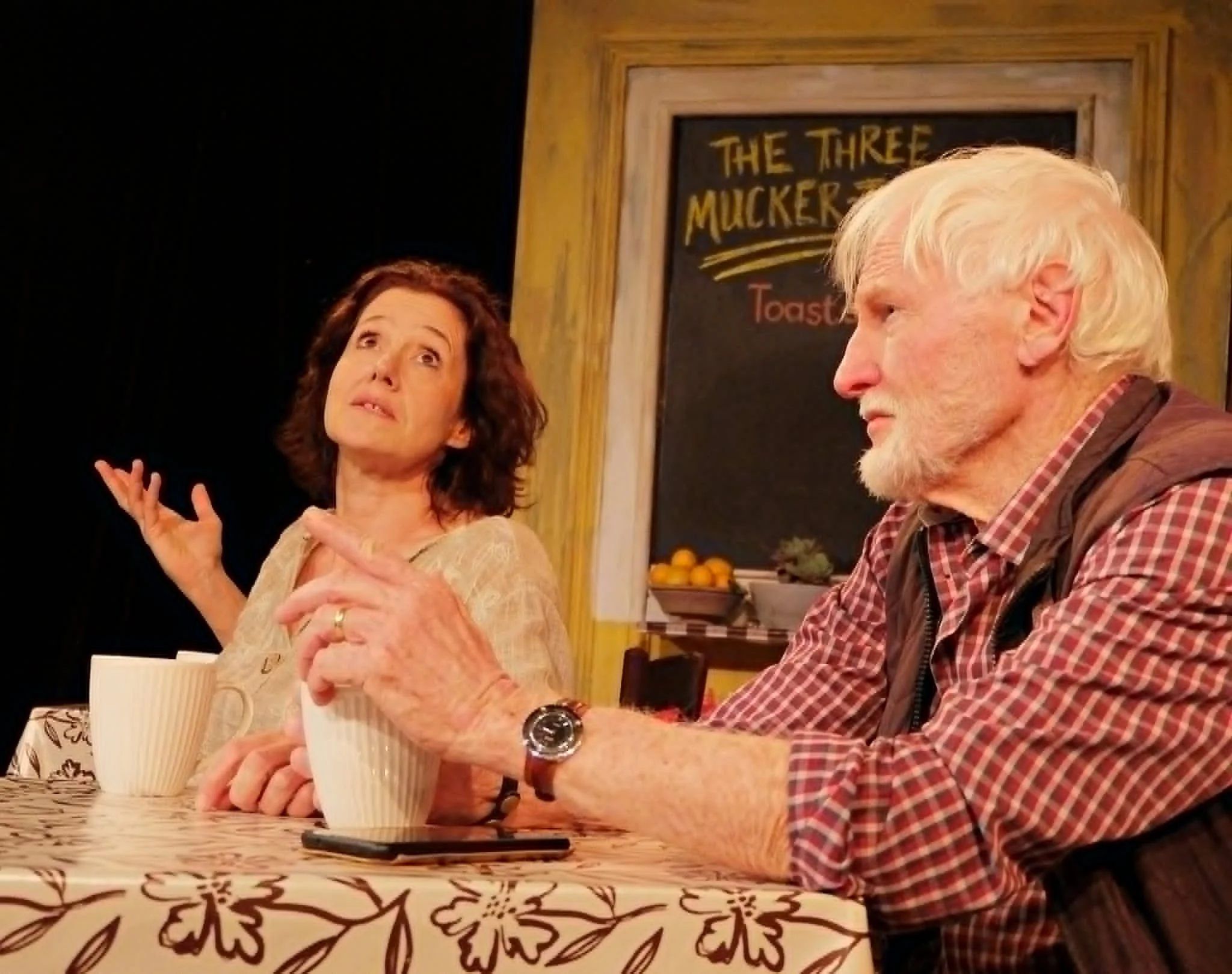
Just outside Parys lies a crater two billion years old, gouged into the earth by a rock that fell from space long before anything walked upright to remember it. Paul Slabolepszy's new play never takes us there, but it hovers over everything that happens inside the small karaoke bar where the action unfolds. Something ancient and violent shaped this ground, and something just as sudden is about to reshape the two people who meet on it at midnight.
It is a device Slabolepszy has returned to again and again across a long career: take two people who seem to have nothing in common, shut the door, and see what happens. Somewhere in the friction, he tends to find the unlikely thing that binds them rather than the obvious thing that separates them. Midnight in Parys is built from the same blueprint, and it is a good one. A woman running from something in her past and a man facing something he cannot outrun find themselves alone after hours, trading small talk that curdles, slowly, into something much less small. What they discover they share by the end is not something I will give away here, but it lands with the kind of quiet force that makes you reconsider everything that came before it.
Two people, one room, no easy way out
The pleasure of watching this kind of play is watching two performers do the actual work of building tension out of very little. There is a table, a bottle, some karaoke machinery gathering dust in the corner, and seventy minutes in which two strangers slowly stop being strangers. Bianca Amato is the one holding the whole thing together. Her Joanna arrives guarded and watchful, and Amato lets the cracks show in careful, well-judged increments, so that by the time the character's real self breaks through, you believe every second of the unravelling. It is a performance built on restraint, which makes the moments when restraint gives way land all the harder.
Slabolepszy, playing opposite his own script, brings a different energy to Aidan, one that reads as weathered rather than sharp. There were stretches where the audience might have wanted a touch more drive from him, but I think that a man running out of road should feel exactly like that: tired, worn down by whatever he is carrying, more interested in getting through the night than performing his way through it. Read that way, the quieter register suits the character even where it occasionally slows the play.
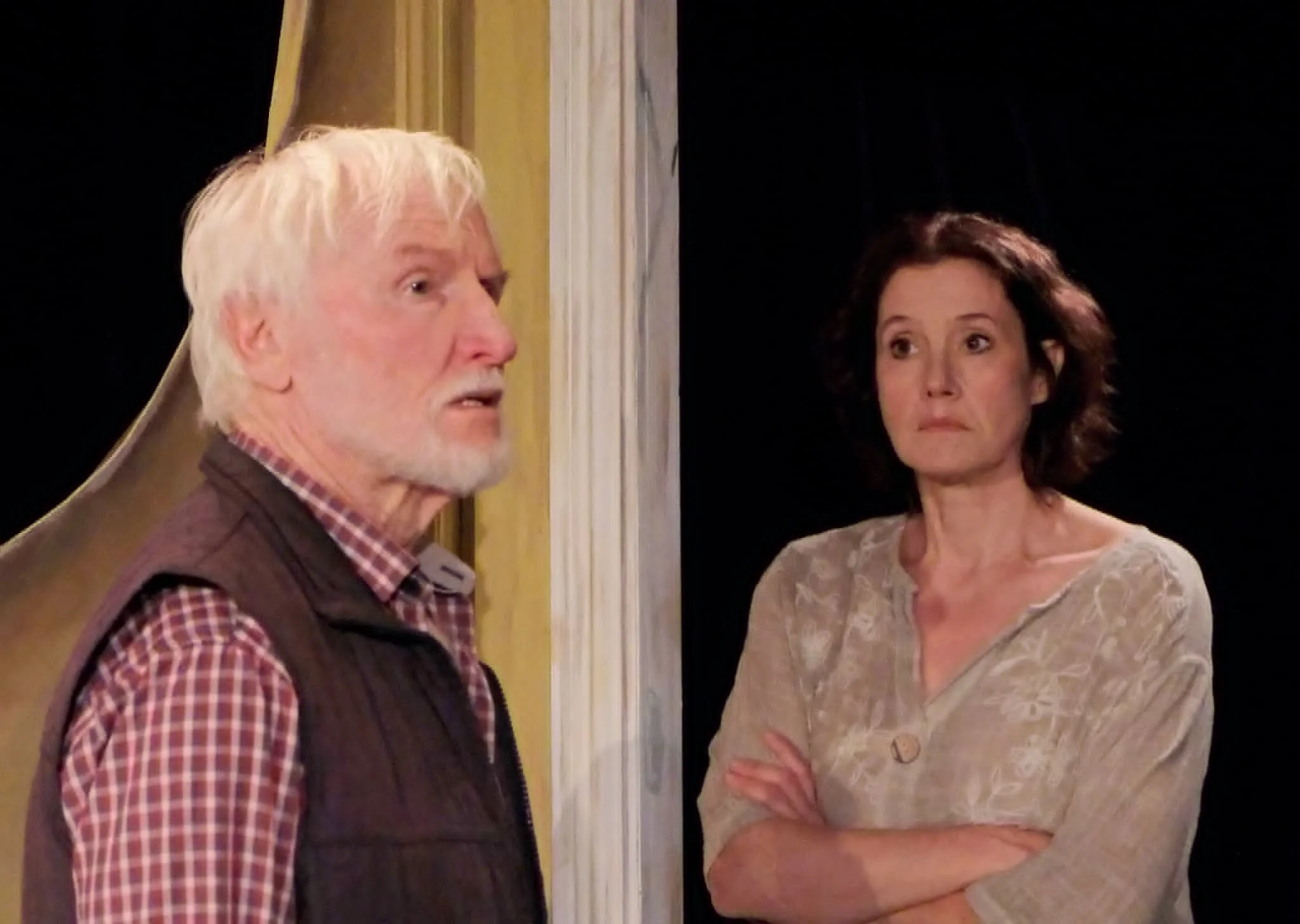
What struck me most were the small openings, the brief moments where both characters let the mask slip before catching themselves and pulling it back up. Those flashes of real feeling, gone almost as soon as they arrive, are where the play does its most affecting work. Bobby Heaney's direction gives these moments room to breathe without ever letting the pace sag for long, which is no small feat in a two-hander confined to a single room.
An intimate room for an intimate story
The Studio Theatre at Montecasino is the right home for this particular story. It is a small, close space, and that closeness does real work here. You are near enough to catch the flicker of doubt crossing a face, near enough that the silences between the dialogue start to carry as much weight as the words themselves. On the night I attended, there was a cluster of young audience members, drama students by the look of them, and I found myself watching their reactions almost as much as the stage. They leaned in for every turn, and when the twist finally landed, the gasp that went round the room was the real thing, not the polite kind you sometimes get from an audience being dutiful. That is a good sign for any piece of theatre, and a particularly good sign for one built almost entirely on the strength of its final reveal.
At seventy minutes with no interval, this is theatre that respects your evening. There is nothing padded about it, nothing here that outstays its welcome. On a cold Johannesburg night, there is something to be said for a play that says what it needs to say and then lets you back out into the world to think about it, rather than one that demands three hours of your patience. Slabolepszy has never been a writer who confuses length with depth, and this play is a tidy demonstration of that instinct at work.
Underneath the intrigue and the late-night setting, Midnight in Parys is really asking one question: what will we do, what will we sacrifice, for the people we love. It is not a comfortable question, and the play does not offer a comfortable answer. There is something both moving and unsettling in watching two people arrive at the outer edge of that question together, in a diner that could be anywhere, on a night that could be any night. It stayed with me long after the lights came up, which is about the best thing I can say of any short, sharp piece of theatre.
If you are after an undemanding night out, this may not be it. But if you want seventy minutes that will sit with you well after you have left the car park, Slabolepszy and Amato, guided by Heaney's steady hand, have built something worth your time.