Rites and Rituals: Moving into Dance at Its Most Powerful
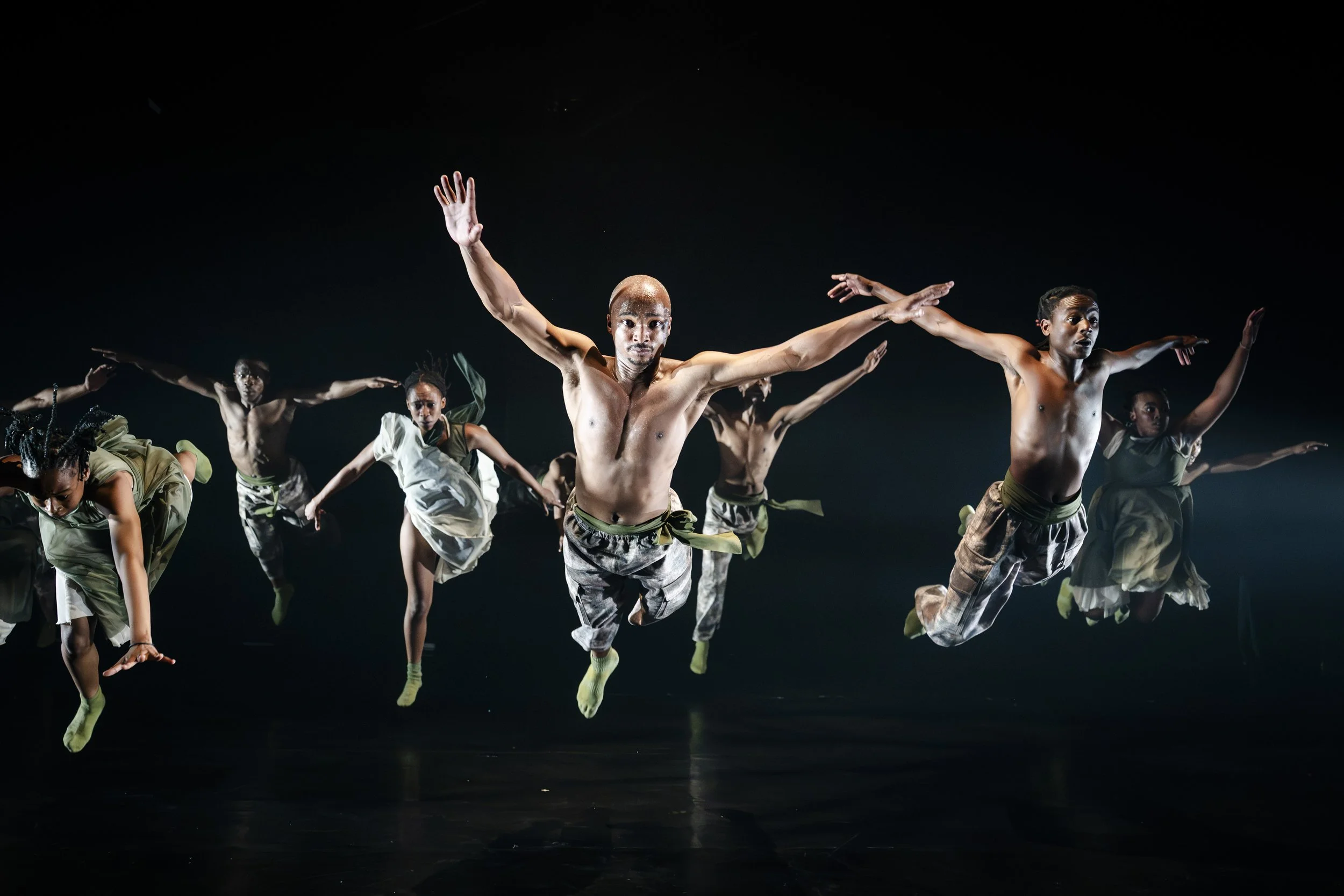
Photo: Herman Verwey
I've spent the better part of my career hunched over a keyboard, staring at a glowing rectangle. The result, after enough years of this, is a body that has largely ossified, comfortable in its autopilot patterns, perfectly adequate for the demands of office life, and not remotely ambitious beyond that. My joints work. My limbs convey me from place to place. But that’s pretty much as far as it goes.
Which is why watching Moving into Dance's Rites and Rituals programme at the Lesedi at Joburg Theatre on Sunday afternoon stopped me rather short. Because what the dancers on that stage were doing with their bodies: the dexterity, the mobility, the precision and energy, all of it fused with genuine emotional expression, was a reminder, delivered with some force, of what the human instrument is actually capable of when someone has bothered to learn how to play it.
The programme brought together three works under a single, elegant premise: a celebration of female choreographic legacy, and what it means to carry that legacy forward in time. Two of the pieces (‘Stone Cast Ritual’ and ‘Rite of Spring’) are established works by choreographers Sylvia "Magogo" Glasser and Esther Nasser respectively, both remounted for Moving into Dance's current company. The third, ‘Quasar — The Energy’, was presented by students of the National School of the Arts. Taken together, they made for a richly varied and deeply moving evening.
A Ritual in Stones
Stone Cast Ritual, Glasser's FNB Vita Award-winning work from 1994, opened the programme. It is built around one of the most deceptively simple theatrical devices I have ever seen: stones, collected from the beach and used by the dancers as percussion instruments, their rhythmic clicking and clacking layered into a hypnotic call-and-response soundscape that gradually pulls the audience into something very close to a trance. The effect is cumulative and profound. Within minutes, the sound of stones on stones had dissolved any distance between stage and auditorium, drawing us into the ritual space the dancers were creating.
What Glasser's choreography understands, and what the MID company executes with remarkable assurance, is that the body in ritual is the body at its most eloquent. Every movement here felt purposeful, economical, and deeply felt. The dancers made it look effortless, though the physical demands were clearly immense. There was a communal intelligence to the ensemble work, a sense of shared intention, that made the whole piece feel less like a performance and more like something being enacted on our behalf.
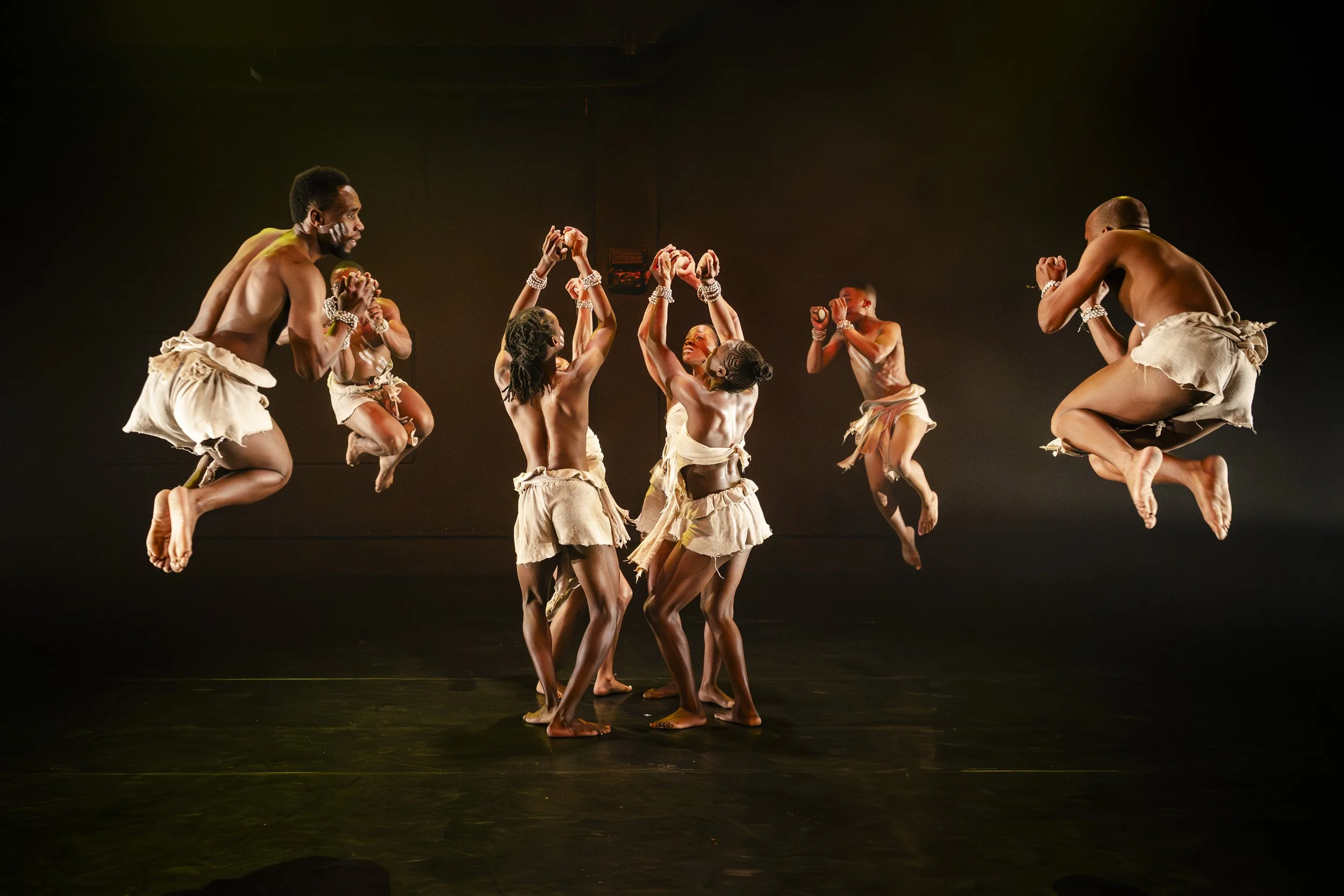
Photo: Herman Verwey
Sparks and Students
Between the two headline works came Quasar — The Energy, choreographed by Laura Cameron and performed by Grade 10 to 12 students from the National School of the Arts. Built on the idea that individual sparks can ignite collective power, Quasar was a vivid demonstration of that thesis in action.
There was nothing tentative or juvenile about this performance. The young dancers moved with precision and clarity, filling the stage with controlled energy, and their entrances and exits were executed with a remarkable lightness: appearing and disappearing so silently, so cleanly, as if the laws of sound had been briefly suspended. What also struck me was the range of body shapes represented on stage: a refreshing and welcome departure from the homogeneity that too often characterises dance presentation, and a reminder that movement is for everyone. The piece drew deserved applause, and served as a quietly powerful statement about what young South African artists are capable of when given the space and opportunity to create.
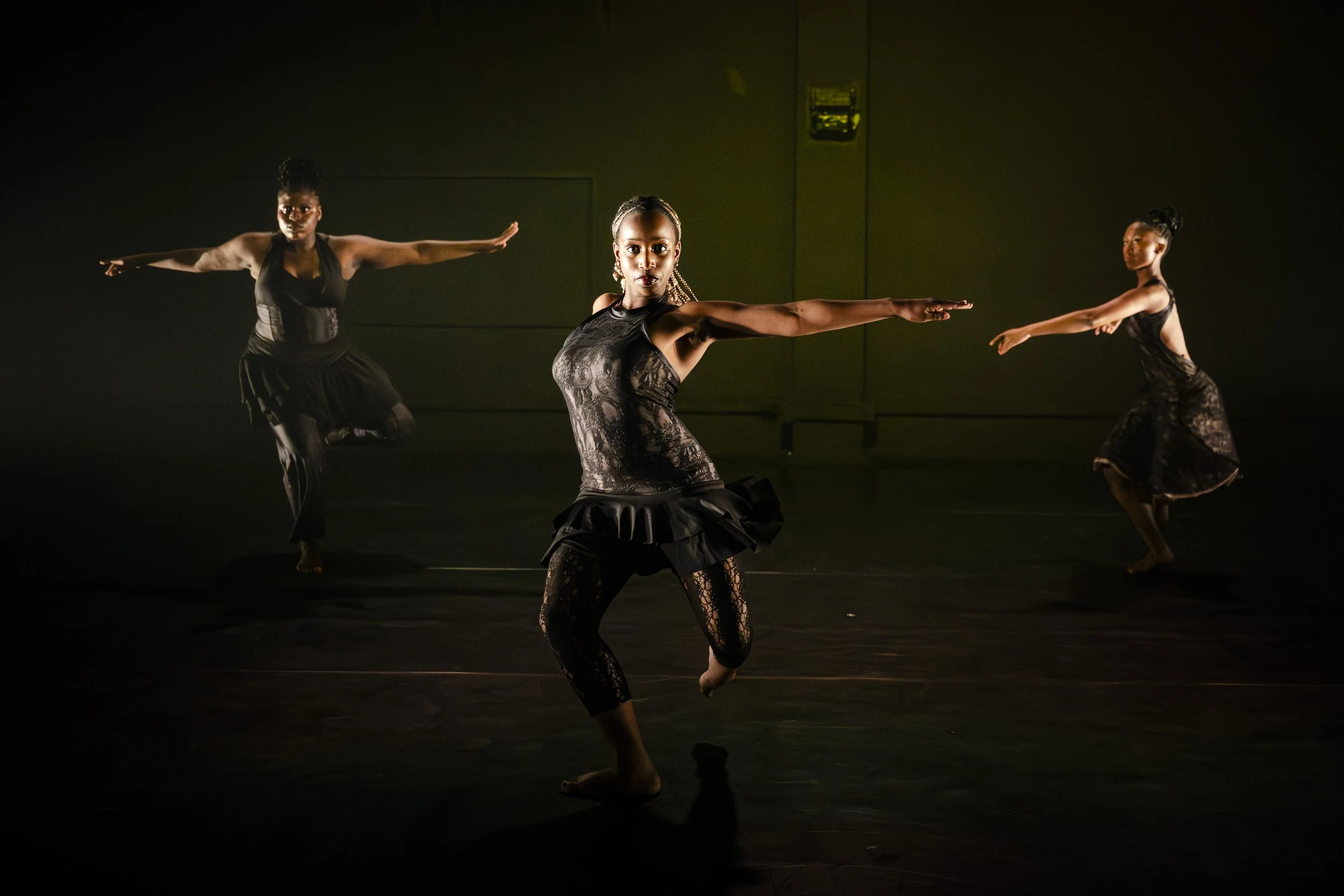
Photo: Herman Verwey
Violence, Sacrifice, and the Body as Witness
The final work, Esther Nasser's reworking of Rite of Spring, is where the evening reached its full emotional altitude.
Stravinsky's score (premiered in Paris in 1913, where it famously caused a near-riot in the audience) is one of the most viscerally powerful pieces of music ever written. Its brutal rhythmic momentum, its refusal to offer any comfort or resolution, has made it a vehicle for countless choreographers across more than a century. In Nasser's hands, that ancient, pagan energy is turned toward something urgently contemporary: the violence that women endure daily, the sacrifice they are made to perform, the polarisation of a world that cannot stop fracturing itself along lines of power and gender.
The effect was extraordinary. Here the full company came together, and the ensemble work had an almost seismic quality: the stage alive with bodies in motion, the choreography alternating between communal tension and individual anguish in a way that felt both inevitable and devastating. The female lead was a singular presence: ferociously athletic and yet simultaneously heartbreaking, carrying the weight of the piece's theme in every movement without ever letting the performance tip into mere performance. It was genuinely stirring work.
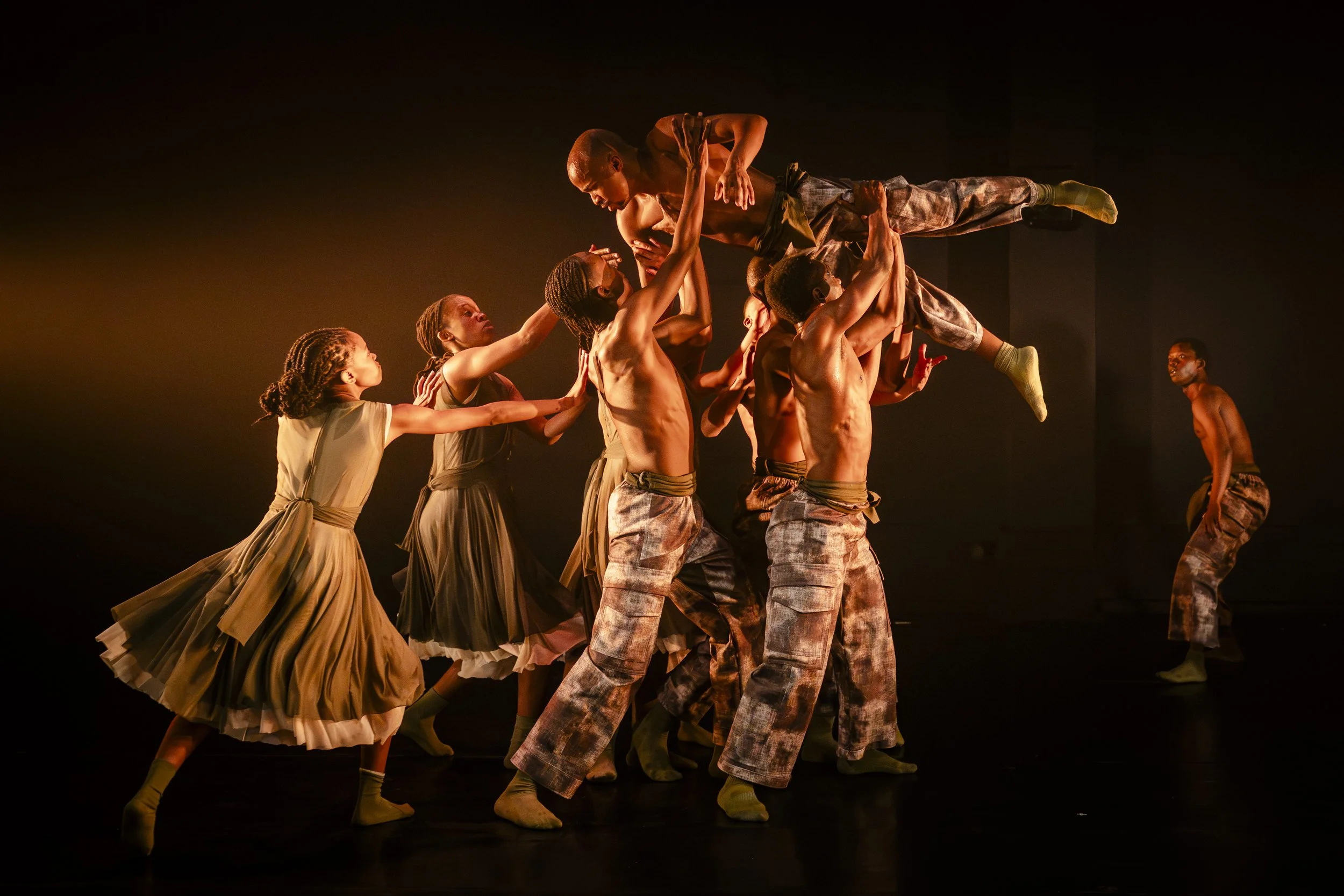
Photo: Herman Verwey
I am not a dance aficionado. My own relationship with movement is somewhere between comedic and cautionary, encompassing some enthusiastic but undistinguished school musical choreography and a wedding first dance that was perhaps more ambitious than my abilities deserved. But none of that matters when the art in front of you is this good. What Rites and Rituals offered was not a display of technical virtuosity for the benefit of those who already speak the language of dance. It was something more generous than that: an invitation, extended to anyone willing to sit still and pay attention, to witness what the human body is capable of when trained, guided, and given something true to say.
Moving into Dance was founded in 1978 by Sylvia Glasser during the height of apartheid, as a deliberate act of artistic defiance against racial separateness. Nearly five decades on, that founding commitment to dance as a force for connection, healing, and social justice remains entirely legible in everything the company does. Rites and Rituals is not a nostalgic exercise in revisiting old work. It is a demonstration of how certain truths, embodied in movement, don't age at all.
I left the Lesedi, and as the cold winter air hit me, so did the awe of what I had just watched.