Soft Vengeance: Graham Hopkins Brings Albie Sachs to Life
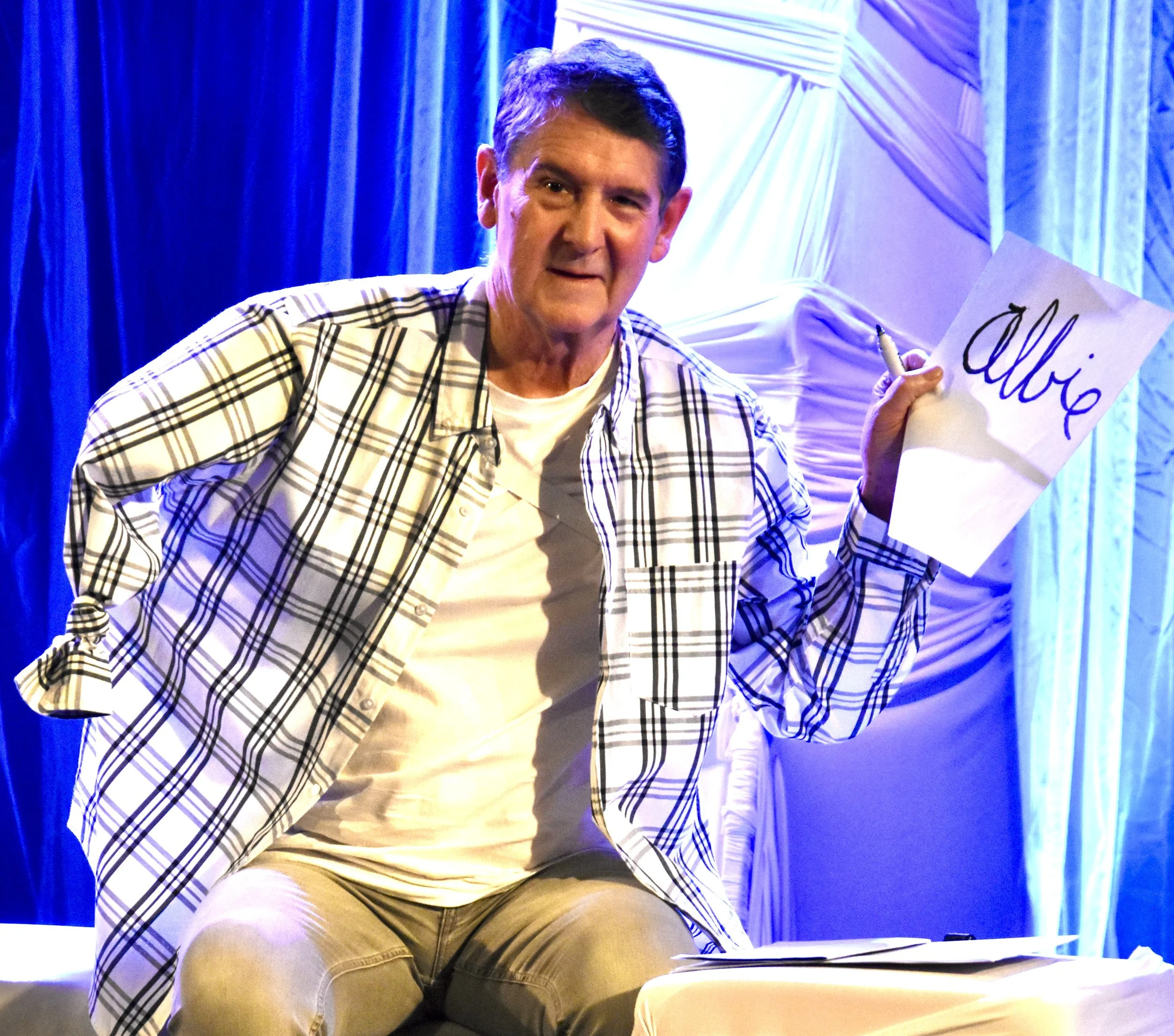
Photo: Philip Kuhn
What does it mean to be maimed by history and still refuse to be hardened by it? That question sits quietly at the heart of Albie Sachs: Fathers, Sons and Soft Vengeance, the extraordinary new one-person play by Gail Louw now running at Theatre on the Square, and it is one that Graham Hopkins inhabits with such gentle, lived-in grace that, by the final moments of the evening, there was not a dry eye in the house, including, it must be said, his own.
The play tells the life story of Albert "Albie" Sachs: activist, exile, bomb survivor, Constitutional Court judge, father; a man who, in his 91st year, remains one of the most remarkable figures produced by the long and painful arc of South Africa's liberation. Sachs began his activism at seventeen, as a law student volunteering in the Defiance Campaign against unjust apartheid laws. He was imprisoned, subjected to solitary confinement without trial, and eventually forced into exile for over two decades. In 1988, a car bomb planted by South African security agents in Maputo tore away his right arm and blinded him in one eye. Upon waking in hospital, he received a letter from fellow ANC members promising revenge. His response was to decline it and to give that decision a name. His "soft vengeance," he wrote, would be the creation of a democratic, non-racial South Africa founded on human rights and the rule of law. He then helped build exactly that, serving on the Constitutional Court for fifteen years and authoring some of its most progressive judgments, including the landmark 2005 ruling that legalised same-sex marriage.
This is, in other words, a life that resists easy dramatisation. The terrain is too epic, the moral stakes too high, the man himself too paradoxically luminous, to risk either uncritical hero-worship or heavy-handed lesson-giving. What Louw has managed, beautifully, is something far more elusive: a poetic slice of biography that does not so much recount events as breathe them. The writing is tasteful and warm and suffused with Sachs' own lyricism: his love of beauty, his gentle humour, the tenderness with which he speaks of his father Solly, the trade unionist, and his son Oliver, whose actual voice we hear in the production, a detail that carries its own quiet power. Some passages linger a little longer than they need to, and a few anecdotes drift before finding their landing, but these are minor quibbles in a piece that rewards patience generously and repeatedly. When the writing soars, it truly soars.
The Body as Story
Fiona Ramsay has made a series of inspired choices in staging this material, and none more striking than how the production handles the physical reality of Sachs' injury. Hopkins performs with a prosthetic solution of elegant simplicity: a black stocking covering the arm at first, convincingly rendered, and later a shoulder-mounted apparatus, manually operated, that captures the silhouette of a pinned sleeve with an almost architectural economy. What is most remarkable is the effect this produces over time. Early in the performance, you are aware of the device as a device. By the midpoint, you have stopped noticing the mechanics altogether and simply see a man, incomplete in one specific way, navigating a world built for two arms. The illusion does not overwhelm; it accumulates, quietly and steadily, until the physical limitation becomes inseparable from the character's story of survival and adaptation. It is stagecraft of the finest kind: understated, purposeful, and deeply affecting.
The staging itself is built around a set of modular boxes and precisely focused lighting that allows Hopkins to conjure a remarkable variety of scenes and moods from an almost bare stage. There is no clutter here, no attempt to compensate through spectacle. The restraint is the point. Ramsay, who co-designed the set with Hopkins, trusts the writing and the performer to do the heavy lifting, and both are entirely equal to that trust.
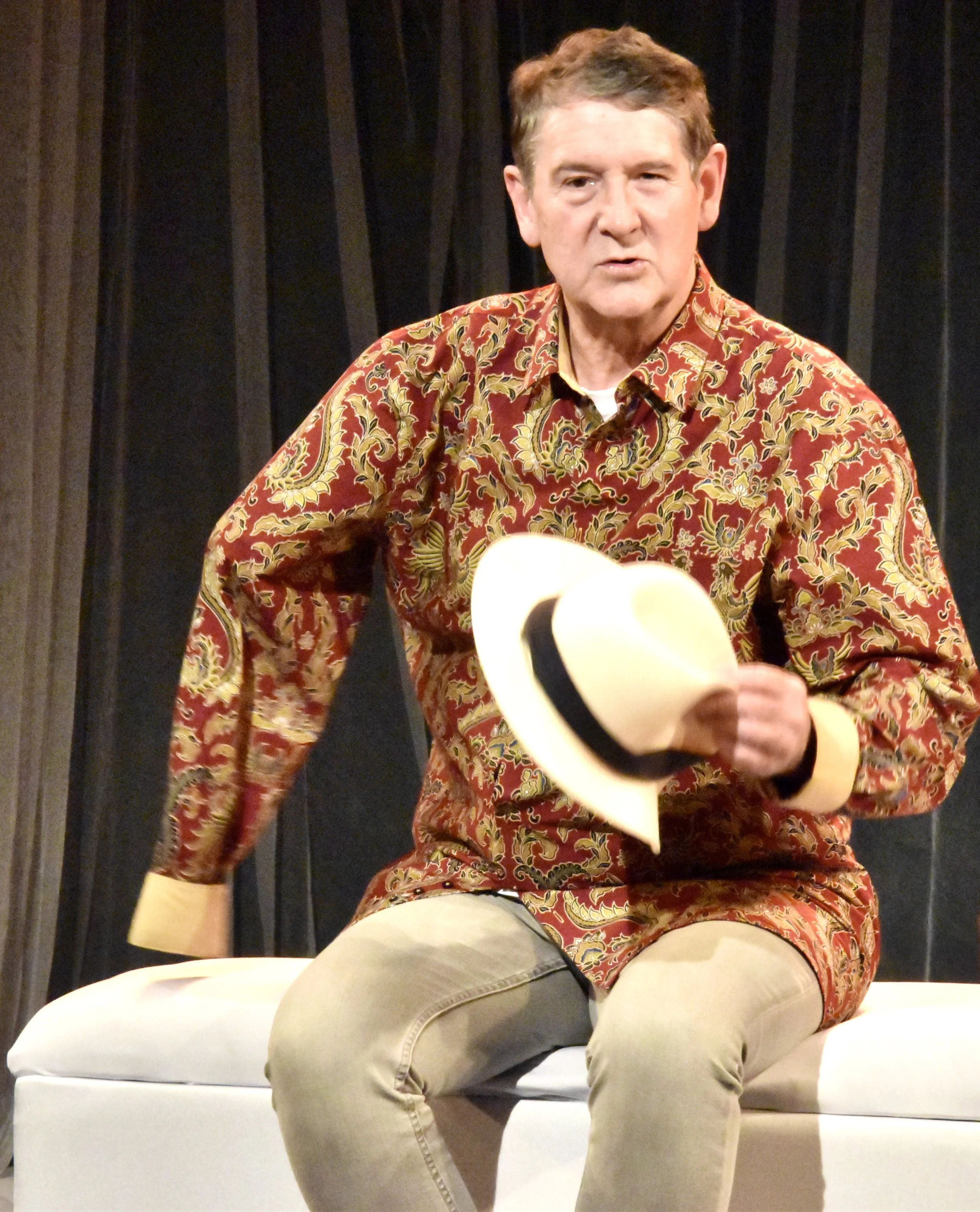
Photo: Philip Kuhn
Living from the Inside Out
Hopkins' performance is the kind that makes you forget you are watching a performance. There is a gentleness to his physical presence that perfectly captures what the press materials describe, and what history confirms, about Sachs himself: a man of deep warmth, easy laughter, and an almost counterintuitive buoyancy given the weight of what he has lived through. Hopkins does not play the suffering; he plays the man who chose, with full knowledge of the cost, not to be defined by it. The result is a performance of great subtlety, the emotion always present but never pushed, surfacing in small gestures and unguarded moments rather than in grand declarations.
The tears that came at the end of the performance were not manufactured. They arrived, as the best theatrical tears do, as the natural consequence of spending ninety minutes in genuine communion with a character. Hopkins was weeping, and the audience was weeping with him, and it felt entirely right.
There is something particularly timely about encountering this story now. South Africa's journey since 1994 has been neither linear nor painless, and the temptations of rage, of disillusionment, of cynicism about what the struggle was for and whether it was worth it, are not abstract. They are daily. Against that backdrop, the life of Albie Sachs serves as something more than an inspiring biographical footnote. It is a living argument (still walking, still speaking, still laughing) for the possibility that justice can coexist with compassion, that a nation can choose not to be consumed by its wounds, and that the most powerful form of vengeance available to any of us is simply to build something worth having.
That this argument is made here through theatre, by three of South Africa's most accomplished theatre practitioners, feels exactly right. This is precisely the kind of story that theatre was made to hold.