One of the defining preoccupations of our current moment is group identity. As the boundaries of who counts as "us" have expanded over the decades, we've been forced to ask difficult questions of our history, and to work out how, if at all, the injustices done under older boundaries can be corrected from where we now stand. Few countries feel the weight of that question as acutely as South Africa, still living with the long shadow of apartheid, a dark period that reshaped this country and its people in ways we are nowhere near finished reckoning with.
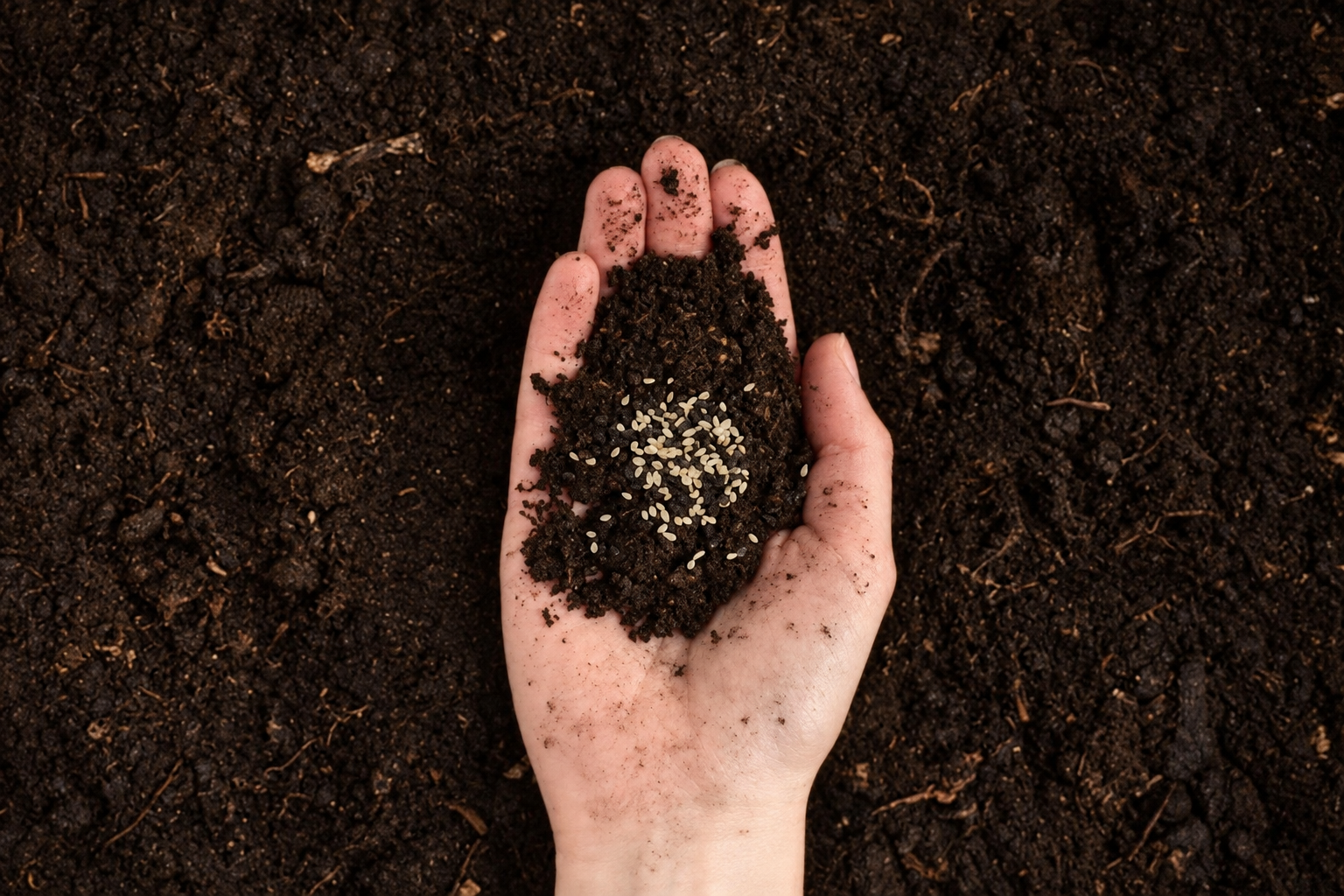
It is into this territory that Sade in Hollandse Kombuise walks, and it does so with a grace, lightness and honesty that genuinely caught me off guard. Christine van Hees's one-woman show, now running at Kippies as part of the Market Theatre's Fringe programme, follows Susan Fokkens as she digs through the soil of her family's past, unearthing the objects buried there one by one. A jacket. A slice of white bread. A spanner. Braai tongs. A stack of old recipes. Each item becomes a small excavation site, a way into the layered, sometimes contradictory inheritance of being Afrikaans in South Africa today. Van Hees, who also wrote the piece, populates this dig with an entire family of relatives, sketched with just enough specificity that you'd swear you had met them yourself. Some are funny. Some are stubborn in ways that are hard to watch. All of them carry a different piece of what it means to belong to this particular tribe, and what that belonging costs.
That's really the dichotomy at the heart of the show: what it feels like to belong to a group, a language, a history, while also carrying the discomfort of what that group's ancestors did. Susan is proud of where she comes from and uneasy about it in the same breath, often in the same sentence, and the show never tries to resolve that tension into something tidier than it actually is. It would be easy to write a version of this piece that lands firmly on one side, either a defence of heritage or an indictment of it, but Van Hees seems far more interested in sitting inside the discomfort of holding both at once, and trusting her audience to do the same.
Beyond the label
Too often, in the wider world and not just on a stage, we judge people primarily on their group identity. We load them up in advance with assumptions attached to an accent, a race, a background, before we've had the chance to actually meet them as individuals. It's an efficient way of thinking, and an unfair one, because that kind of over-simplification gets in the way of humanity meeting humanity.
We can do better than this. We can strive to see people for who they are beyond their culture, and stop painting entire groups with the same brush. But, and this is the part the show gets so right, doing that doesn't require us to abandon culture altogether. Language, tradition and heritage still play a vital role in who we are, and none of that should be sacrificed on the altar of a political ideal. What we need instead is to separate the actions of individual people from the wider labels that group them, and from the communities to which they happen to belong. It's a tightrope, balancing pride in where you come from against honest reckoning with what your people have done, but it's one we have to look in the eye if we want any real social progress. Watching Susan attempt that same balancing act, prop by prop and memory by memory, is what gives the show its quiet power.
Sade in Hollandse Kombuise has clearly had time to find that balance. Van Hees began developing the piece back in 2019, and it has since travelled through the National Arts Festival's digital Fringe, where it won a Standard Bank Ovation Award, and this year's Klein Karoo Nasionale Kunstefees, where it picked up a second one. That history shows in the confidence of the writing and performance alike; nothing here feels first-draft or undercooked.
A great deal of that confidence comes down to Van Hees herself, who moves between Susan and her various relatives with real economy, using little more than voice and posture to tell you exactly who you're with. She's just as at ease in the show's comic beats as she is in its more exposed, confessional stretches. Under Campbell Meas's direction, the production trusts its bare, object-strewn space and Van Hees's own instincts rather than reaching for staging tricks, which suits material this intimate.
The play is performed in a mixture of English and Afrikaans and the whole thing was a joy to behold. Van Hees does a wonderful job of carrying you through even the moments where the language shifts without translation, because you feel exactly what's being summoned even when you don't catch every word.
None of this is comfortable territory, and the show doesn't pretend otherwise. But it never once feels like a lecture, which is its own kind of achievement. Sade in Hollandse Kombuise asks its audience to sit with contradiction rather than resolve it neatly, to hold pride and accountability at the same time, and to remember that behind any group label are simply people. It's a generous, clear-eyed, beautifully performed piece of theatre, and one I'd urge you to see while it's still on.