Sarajevo: New Faces, Old Wounds
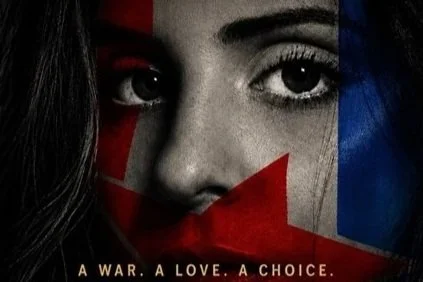
Watching a play for the second time, knowing exactly what's coming, does something strange to the tension. You'd think familiarity would soften the blow. Instead, sitting in the dark at Theatre on the Square for this return season of Sarajevo, I found the opposite was true. Knowing where these three friends end up made every small kindness between them, every shared joke, every flicker of the old closeness, land like a held breath. You watch people build something you already know will be destroyed, and somehow that makes the destruction harder to bear, not easier.
I reviewed Sarajevo here on this blog when it first played at this theatre, and I stand by everything I felt that night. But a second viewing is its own experience, and I didn't want to simply repeat myself. So consider this less a follow-up and more a return visit, seeing familiar rooms with different eyes, and in this case, two different faces.
A Play That Rewards a Second Look
Aimée Mica Komorowsky's Sarajevo, directed by Thorsten Wedekind, hasn't changed in its bones. It's still the story of Mirela, Aleksander and Slobo, childhood friends whose bond is dismantled not by one great betrayal but by a slow accumulation of small ones: a suspicious glance, a word left unsaid, a choice made out of fear rather than conviction. It's still anchored by Peter, the South African photographer whose presence in this unravelling world raises uncomfortable questions about what it means to witness suffering rather than live it. And it's still, unmistakably, one of the more ambitious and unusual pieces of theatre being staged in Johannesburg right now, not least because it takes us somewhere we so rarely go on our local stages. We get a great deal of work set here, or in Britain, or in America. Precious little transports us to the Balkans, and Sarajevo does so with a specificity that never feels like tourism.
What struck me again, perhaps even more than the first time, is how carefully the production builds its world through sound. The Bosnian language woven through the dialogue isn't decorative; it grounds the piece in a reality that resists easy translation into something safely foreign or safely familiar. The traditional music and the wider soundscape do a huge amount of quiet work, underscoring the drama without ever announcing themselves. By the time the play reaches its devastating final movement, you realise the tension has been built as much through what you've heard as what you've seen.
Since I last saw it, the production has picked up four Naledi Theatre Awards, including Best Production and Best Director, along with three further nominations. None of that surprised me. What did surprise me, slightly, was how the accolades haven't calcified the piece into something reverent or careful. It still feels raw.
New Faces, Old Wounds
The most obvious change since my first visit is in the casting. Damon Berry now plays Peter, and André Lötter takes on Aleksander, both stepping into roles originated by other actors. I went in curious about how different the experience would feel, and it was genuinely rewarding to see two performers find their own way into characters I already had strong impressions of.
Berry brings a quieter, more internal quality to Peter. Where I remembered a photographer whose idealism curdled visibly over the course of the play, Berry's version seems to be fighting that erosion the whole way through, which makes his eventual complicity feel less like a fall and more like a slow, reluctant surrender. It's a subtle shift, but it changes the emotional weather of his scenes considerably.
Lötter, meanwhile, gives Aleksander a boyishness that makes the character's later choices sting all the more. You can see, in the early scenes, exactly the kind of young man who might have simply lived out an unremarkable, happy life had history not intervened. That's a difficult thing to convey without tipping into sentimentality, and Lötter mostly manages it.
Aimée Mica Komorowsky and Ivan Nedeljkovic return as Mirela and Slobo, and if anything, the performances have deepened with time and repetition rather than worn thin. Nedeljkovic in particular continues to do remarkable work with a character who could so easily have become a simple vessel for brutality. There's real anguish underneath the aggression, and you feel it most acutely in the play's final moments.
Those final moments deserve a mention on their own. I've rarely seen a cast so visibly moved by their own work. The emotion at the curtain call wasn't performed for the audience; it looked like the genuine aftershock of having spent two hours somewhere very dark and not quite having found their way back yet. It's a reminder of what this material actually costs the people telling it, night after night.
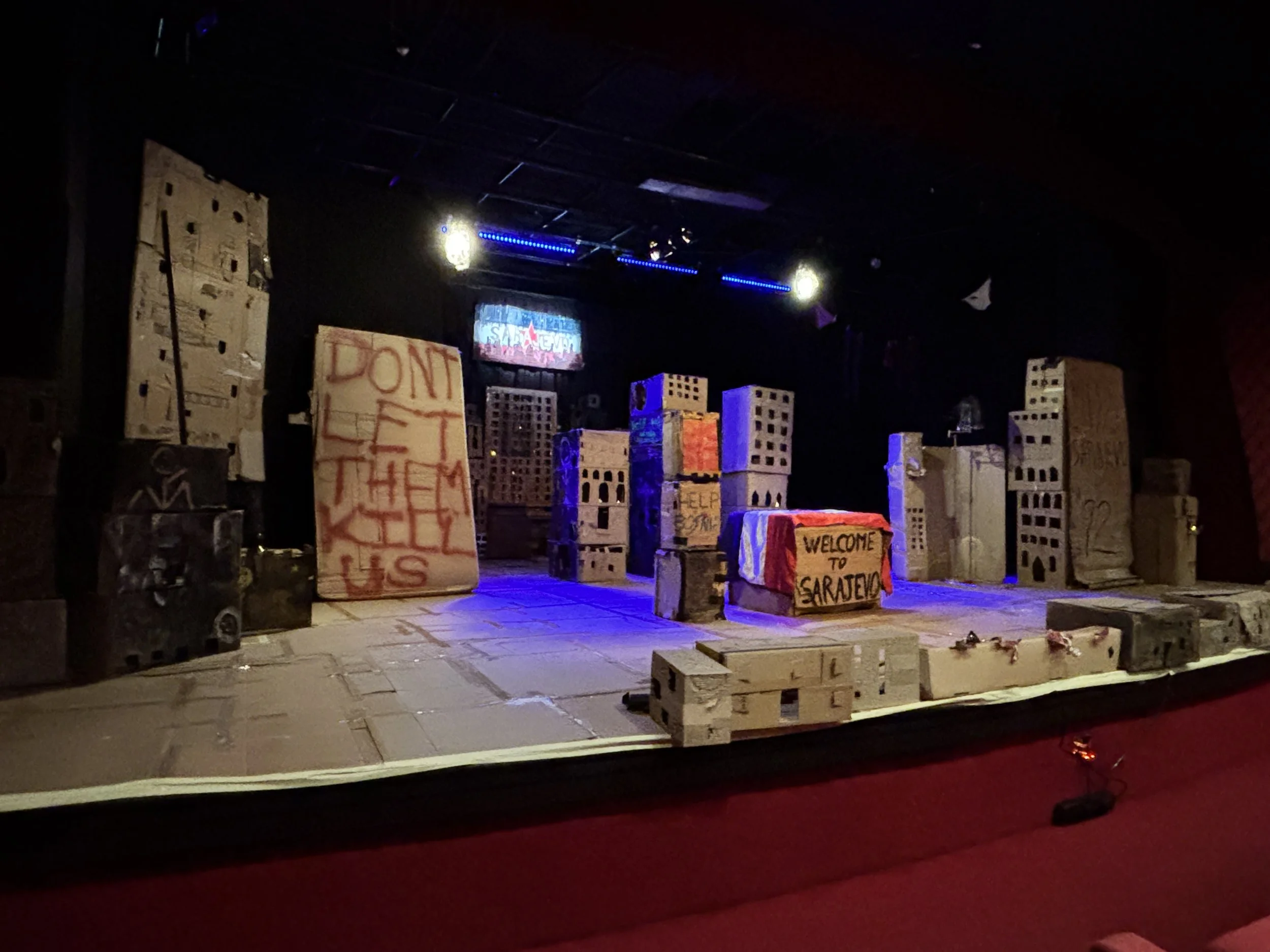
The house was full the evening I attended, and you could feel that fullness pressing in on the emotional weight of the piece. There's something about experiencing collective grief in a packed room that a private viewing at home could never replicate. Nobody around me was checking their phone. Nobody was shifting in their seat. The silence after the lights finally dropped was the kind that tells you everyone in the room has been somewhere together.
I won't pretend Sarajevo is easy viewing. It isn't meant to be. It asks you to sit with the worst instincts human beings are capable of, the small compromises and larger cruelties that ideology and fear can extract from ordinary people. But it also, quietly, insists on the opposite: that friendship, however fragile, however ultimately unable to withstand what history throws at it, is still worth the cost of loving. Watching it a second time, knowing exactly how much it would ask of me, I went anyway. I'm glad I did.