Under the Streetlight: A Review of The Return of Elvis du Pisanie
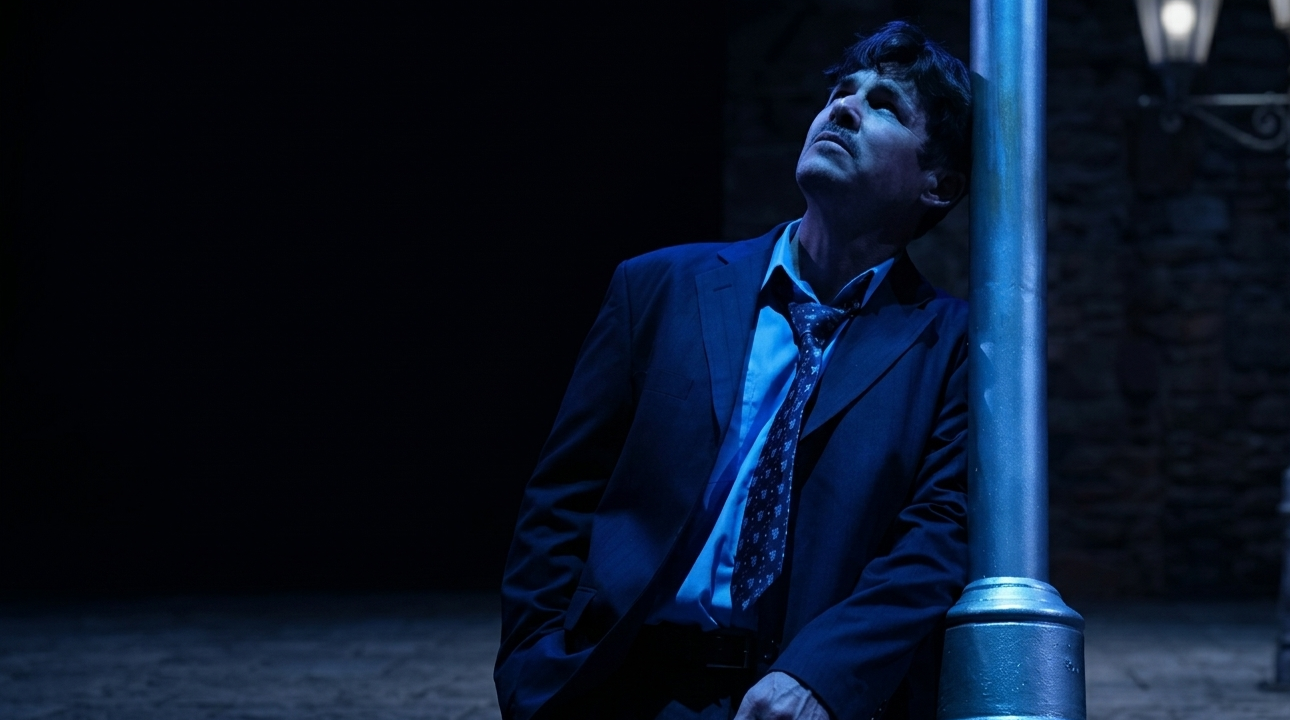
Ask any South African theatre-goer of a certain vintage about Paul Slabolepszy and watch something shift in their expression: a kind of warmth, or recognition, like hearing a song you haven't thought about in years but still know every word of. His plays have a way of locating something deeply, specifically South African and holding it up to the light. The Return of Elvis du Pisanie, which Slabolepszy originally wrote and performed in the early 1990s, winning every major theatre award in the country in a single year, has returned to the Joburg stage, this time with Ashley Dowds in the role of Eddie du Pisanie. It is a production that earns its reputation.
The premise is deceptively simple. Eddie is an East Rand salesman who has just been retrenched. Alone in his garage, having written a note to his wife, he switches on the car radio. An Elvis Presley song drifts out of the speakers and takes him back, not just to younger days, but to a single moment in his childhood, a moment on a street corner that quietly determined the shape of his entire life. The play is about that moment, and what it means to rediscover it.
One-person shows live or die by the performer. There is nowhere to hide, no ensemble to lean into, no shared stage energy to draw from. You have to build an entire world from the ground up, populate it with people who don't exist, and make an audience believe in all of it. Alone. This is precisely what Dowds does, and the achievement is considerable. The show begins with a kind of careful quietness, as Eddie orients himself and orients us, setting out the geography of his life and his despair. There is a deliberate accumulation at work. Dowds allows the story time to breathe, to settle, to gather weight. And then, incrementally, something opens up.
A World Built from Accents and Memory
Slabolepszy's script is a love letter to the textures of South African life: the particular cadences of the East Rand, the way English and Afrikaans weave together in conversation, the specific smell and feel of a childhood that many in the audience will recognise with a jolt of pleasure. Dowds inhabits all of it. His command of accent and voice is one of the production's great pleasures, shifting between characters with a fluency that eventually stops feeling like a technique and starts feeling simply like life. By the time the play reaches its emotional centre, you have quietly forgotten that a single person is doing all of this. You have surrendered to the world he has made.
Certain moments land with particular force. There is a story involving a boomslang that had the audience genuinely convulsed. It is the kind of joke that could only exist in this country, grounded in a very South African understanding of landscape and peril and absurdity. And in the moments when Dowds turns inward, when Eddie travels back to the street corner of his childhood, his face does something extraordinary. You see the effort of remembering, the way the past pushes up against the present, and you find yourself doing your own quiet excavation. This is the particular gift of good solo performance: the actor's interiority becomes a kind of invitation to the audience's own.
The staging is minimal and effective. A single street lamp illuminates the playing space, its pool of light doing a great deal of the scene-setting work. There is something right about this simplicity. The play is, after all, about a man standing alone under a streetlight with his memories. The production doesn't argue with that. It trusts it.
Why It Still Matters
South African theatre is rich and varied, but there remains something irreplaceable about a play that is local to its marrow, that could not have been written anywhere else, could not be set anywhere else, that speaks in the rhythms and references of a very particular place and time. The Return of Elvis du Pisanie is one of those plays. Its concerns: retrenchment, despair, the question of whether any of us have any real agency over our own destinies are universal enough. But the way Slabolepszy frames them, through the lens of an Afrikaans-inflected East Rand salesman who finds redemption via Elvis Presley, is gloriously, unmistakably of here.
It is worth saying clearly: this is a show about a man who has written a suicide note. It begins in a dark place. But Slabolepszy and Dowds handle that darkness with such honesty and, ultimately, such generosity of spirit, that the journey through it becomes something genuinely uplifting. You leave not with heaviness but with something closer to gratitude for the past, for the moments that shaped you, and for the fact that someone put this story back on a stage.