A Second Encounter with The Tramp
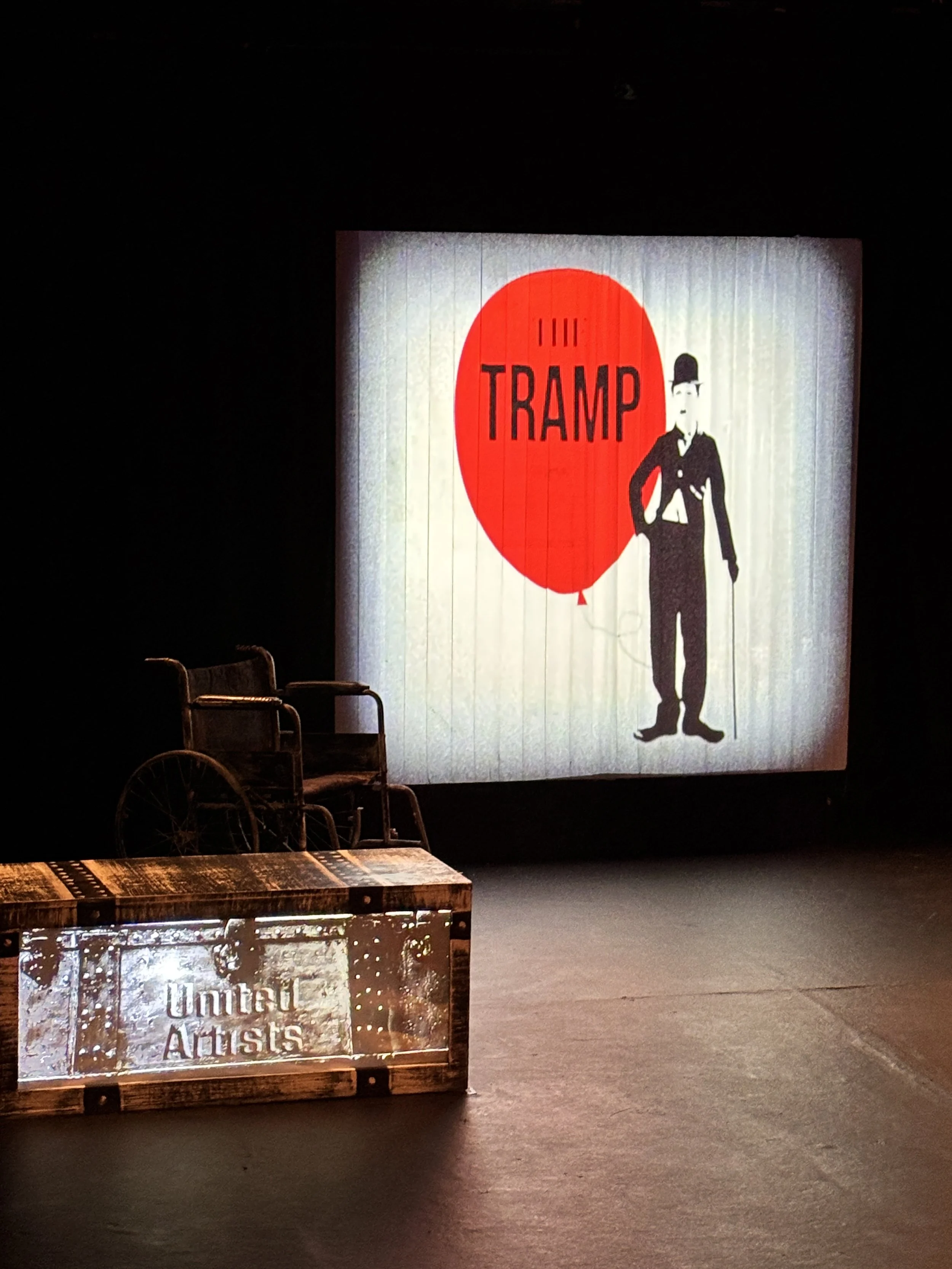
Watching the same production twice reveals something most opening nights can't: whether the work has genuine depth or simply the sheen of novelty.
When I reviewed The Tramp during its initial run at Theatre on the Square last year, I focused on how Daniel Anderson's performance captured the contradiction at the heart of Charlie Chaplin: the man who made millions laugh while carrying profound loneliness. Returning to the production now, back by popular demand, I found myself paying attention to different things. Not the broad strokes of biographical storytelling, but the precision of the craft. The care in every choice. The way a seemingly simple one-man show reveals layers of complexity on second viewing.
Amanda Bothma's writing and direction deserve particular credit here. This isn't a conventional biographical musical where songs interrupt narrative to tell us what we already know. Instead, the piece moves fluidly between Chaplin's public triumphs and private struggles, asking a question that feels genuinely philosophical rather than merely rhetorical: who came first, Charlie or The Tramp? Did the man create the character, or did the character, in some sense, create the man?
The production suggests that Chaplin's genius lay partly in his ability to pour his own poverty, loneliness, and longing into the Tramp, transforming personal pain into universal comedy. But it also suggests something more unsettling: that the Tramp became so beloved, so iconic, that Chaplin himself became trapped by the character he created. The comedy and tragedy aren't just blurred in the Tramp's films. They're blurred in Chaplin's life.
Anderson understands this instinctively. What struck me on second viewing wasn't just his energy or technical skill, though both are considerable. It was his taste. The restraint. He knows exactly when to lean into the comedy and when to pull back, allowing moments of genuine pathos to land without melodrama. There's a generosity in his performance, a willingness to serve the story rather than dominate it. This type of theatrical storytelling seems purpose-built for his particular gifts: the ability to hold an audience alone on stage whilst making it feel like a conversation rather than a monologue.
Paul Ferreira's live piano accompaniment deserves equal recognition. In an era where most theatrical productions rely on pre-recorded tracks, there's something special about having a pianist responding in real time to Anderson's performance. The honky-tonk melodies and songs composed by Chaplin himself create a soundscape that feels both nostalgic and immediate. Ferreira isn't just providing musical support; he's in dialogue with Anderson, shaping the emotional temperature of each scene.
The music choices throughout are impeccable. The lyrics fit naturally into the narrative flow, advancing character and story rather than stopping the action to make a point. This is musical theatre at its most integrated, where song feels like the only possible way these particular moments could be expressed.
What makes The Tramp worth revisiting is that it tells a timeless story without pretending Chaplin was timeless himself. The production acknowledges the scandals, the failed marriages, the exile from America during the McCarthy era. It presents Chaplin as a man of contradictions: capable of creating art that spoke to universal human experience whilst struggling to sustain basic human relationships. The poor boy who became fabulously wealthy. The comic genius who battled depression. The symbol of silent cinema who was eventually silenced by his adopted country.
These contradictions don't diminish Chaplin. They humanise him. And in doing so, the production reminds us why his work endures. The Tramp character resonated because he embodied something true about the human condition: that we're all simultaneously dignified and ridiculous, hopeful and defeated, searching for connection whilst often sabotaging our own chances at finding it.
On first viewing, I was moved by the story. On second viewing, I was struck by how well the production holds together. Every element serves the whole. Anderson's performance, Bothma's direction, Ferreira's musical accompaniment, Wilhelm Disbergen's design—all of it works in harmony to create something that feels both intimate and epic, personal and universal.
Theatre this good deserves a second run. And if you missed it the first time, or if, like me, you want to experience it again, there's real value in giving yourself over to this story of the man behind the moustache. Not because it provides definitive answers about who Chaplin was, but because it asks the right questions about what it means to create art that outlives you, and whether the characters we create eventually become more real than we are.
The Tramp runs at Theatre on the Square until 28 February 2026.