Prima Facie Doesn't Let You Breathe, and That's the Point
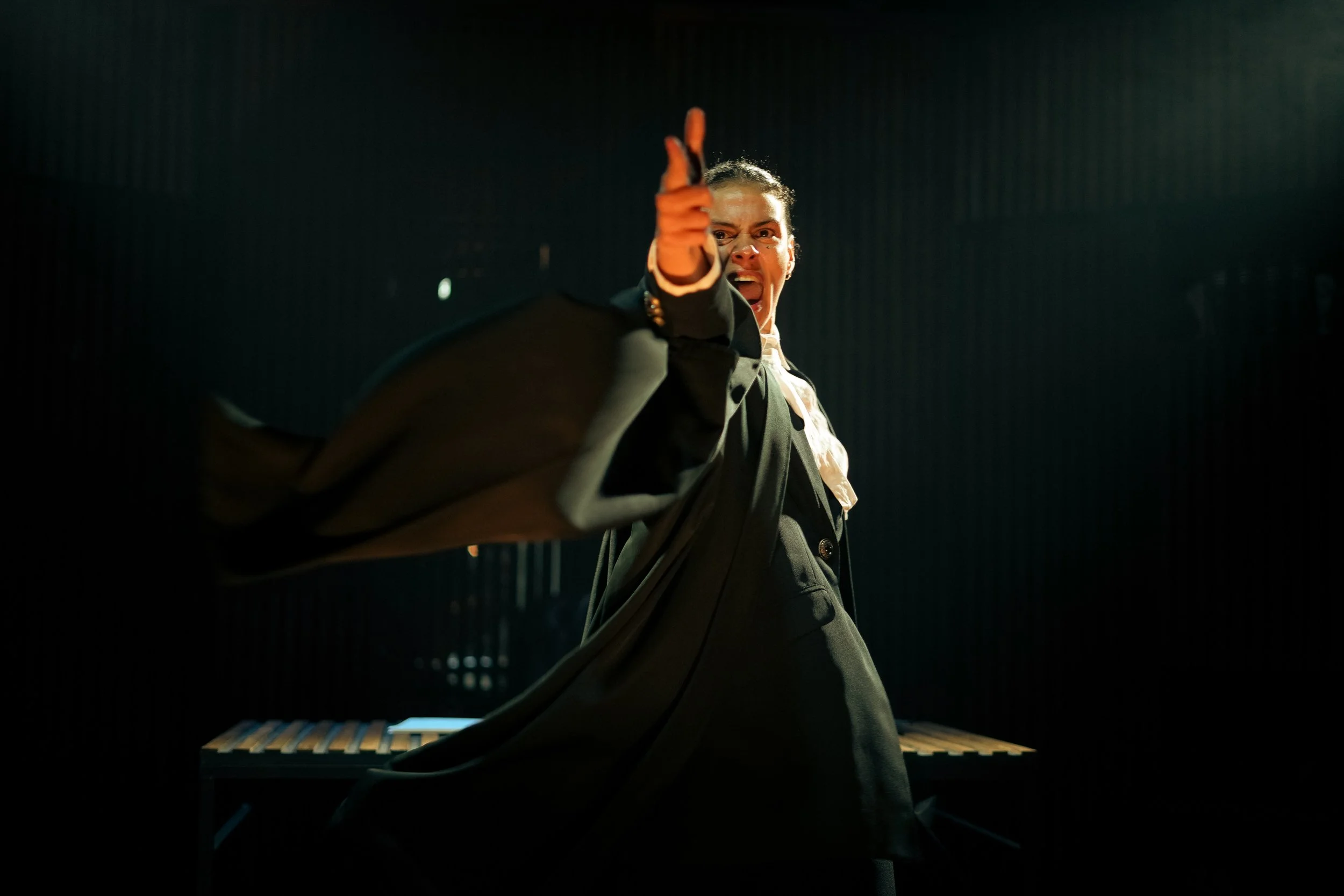
Photo: Quaid Jones
South Africa does not lack for statistics on gender-based violence. We have grown almost numb to the numbers, the reports, the hashtags that flare up and fade. What we lack, more often, is a way to feel the scale of it rather than simply know it. Prima Facie arrives at the Market Theatre in that gap, and the timing could not be less comfortable, or more necessary.
Suzie Miller's play needs little introduction by now. Since its 2019 premiere in Sydney, it has travelled the world, picking up an Olivier for Jodie Comer along the way and, more recently, a companion piece in Inter Alia, which I reviewed here after its National Theatre Live screening in Johannesburg. That production shared this one's bones: a legal mind undone by the very system she has spent her career defending. Seeing Miller's writing performed live rather than filmed, though, is a different experience altogether, and a far more punishing one.
Tessa is a barrister who has climbed out of a working-class upbringing into silk and self-assurance, brilliant in cross-examination and utterly convinced that the law, applied properly, delivers justice. An assault turns that conviction inside out. Suddenly she is not the one asking the questions but answering them, and the rules of evidence she has spent years wielding on behalf of others are turned, with cold precision, against her.
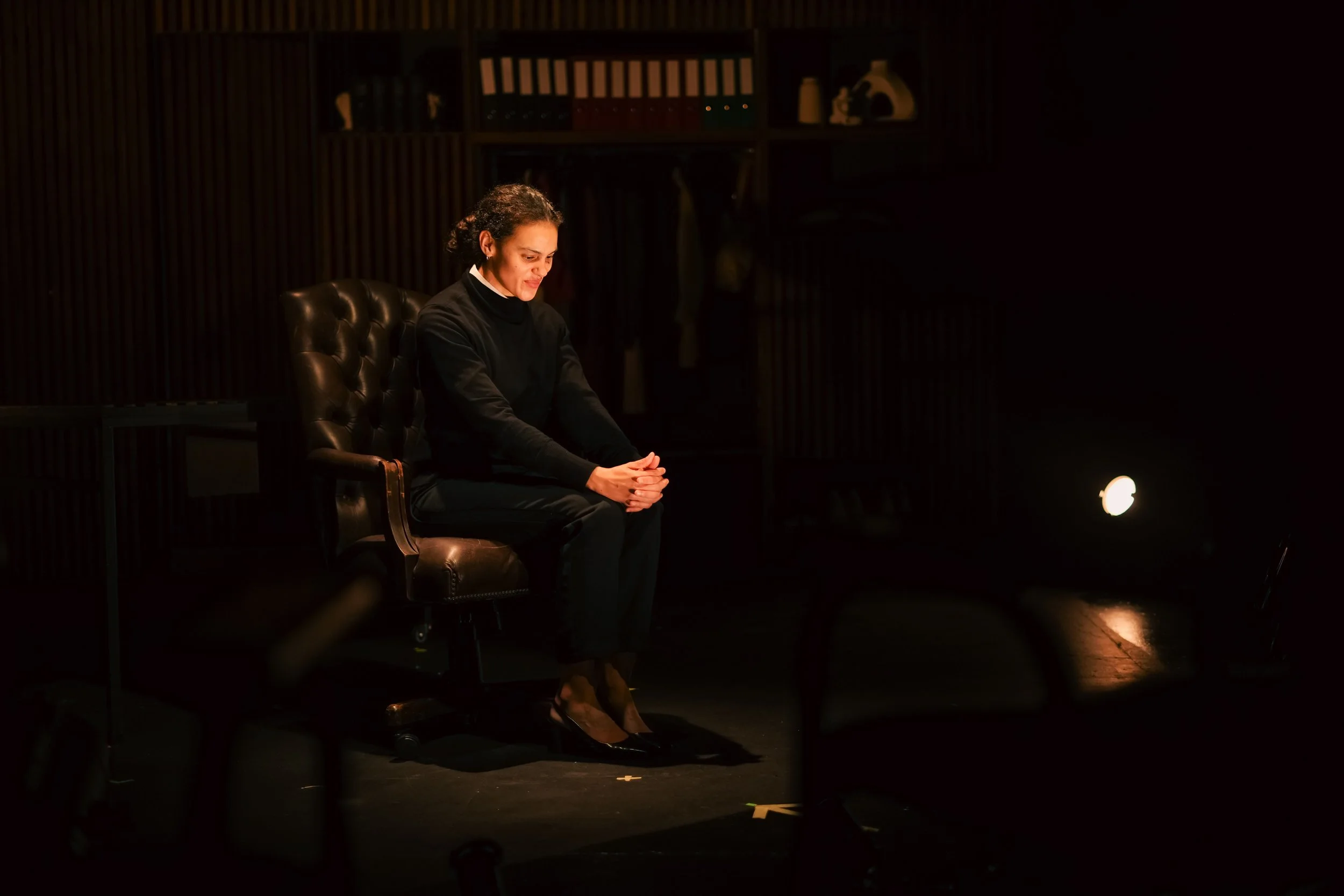
Photo: Quaid Jones
A show that will not let you exhale
What struck me most was the pace. Danica De La Rey Jones and director Neil Coppen have built something relentless here, a production that barely pauses for breath across its full run time. There is no interval to release the pressure, and the text itself seems constructed to deny the audience any room to settle. It is a deliberate choice, and it works. By denying you the usual rhythm of a night at the theatre, rise and fall, tension and release, the production mirrors something of what it is describing: an ordeal with no natural stopping point, no moment where the body gets to recover before the next blow lands. The pacing does not just tell the story. It makes you feel it in your chest.
I will admit something slightly less lofty here too. I sat through much of the performance uncomfortably hot, sweat prickling at the back of my neck in the tightly packed Barney Simon. At first I assumed the aircon had simply given up for the night. By the interval-less midpoint, though, I had begun to wonder whether that discomfort wasn't at least partly by design, or at least a fitting accident. In a space that intimate, with a performance that committed, the heat in the room starts to feel like a physical extension of what is happening on stage. You are not just watching Tessa unravel. You are sweating through it with her.
De La Rey Jones carries the full two hours alone, and what impressed me was not simply her stamina but her control. Tessa is warm and funny in the courtroom scenes, sharp-tongued with her colleagues, entirely believable as a woman who has learned to use charm as a professional tool. Then, within moments, the register shifts and she is somewhere else entirely, somewhere much darker, and the transition never feels like a performer switching gears. It feels like watching a person come apart in real time. That range, moving between levity and devastation within a single breath, is the hardest thing to do convincingly on a stage, and she does it without a single false note.
She is not carrying the production by herself, either. Tina Le Roux's lighting and Charl-Johan Lingenfelder's sound design do a great deal of quiet, unglamorous work here, shaping the space around Tessa so that a single performer in a mostly bare room never once feels underpowered. There were stretches where I genuinely forgot I was watching a one-woman show. The design gives the piece scale without ever distracting from her.
What I appreciated too was how firmly the production has been rooted in a South African context rather than simply imported wholesale. The legal language, the texture of the world Tessa moves through, has been adapted with real care, so that the play never feels like a UK or Australian story being performed at us. It feels like ours, which makes its arguments land with even more weight.
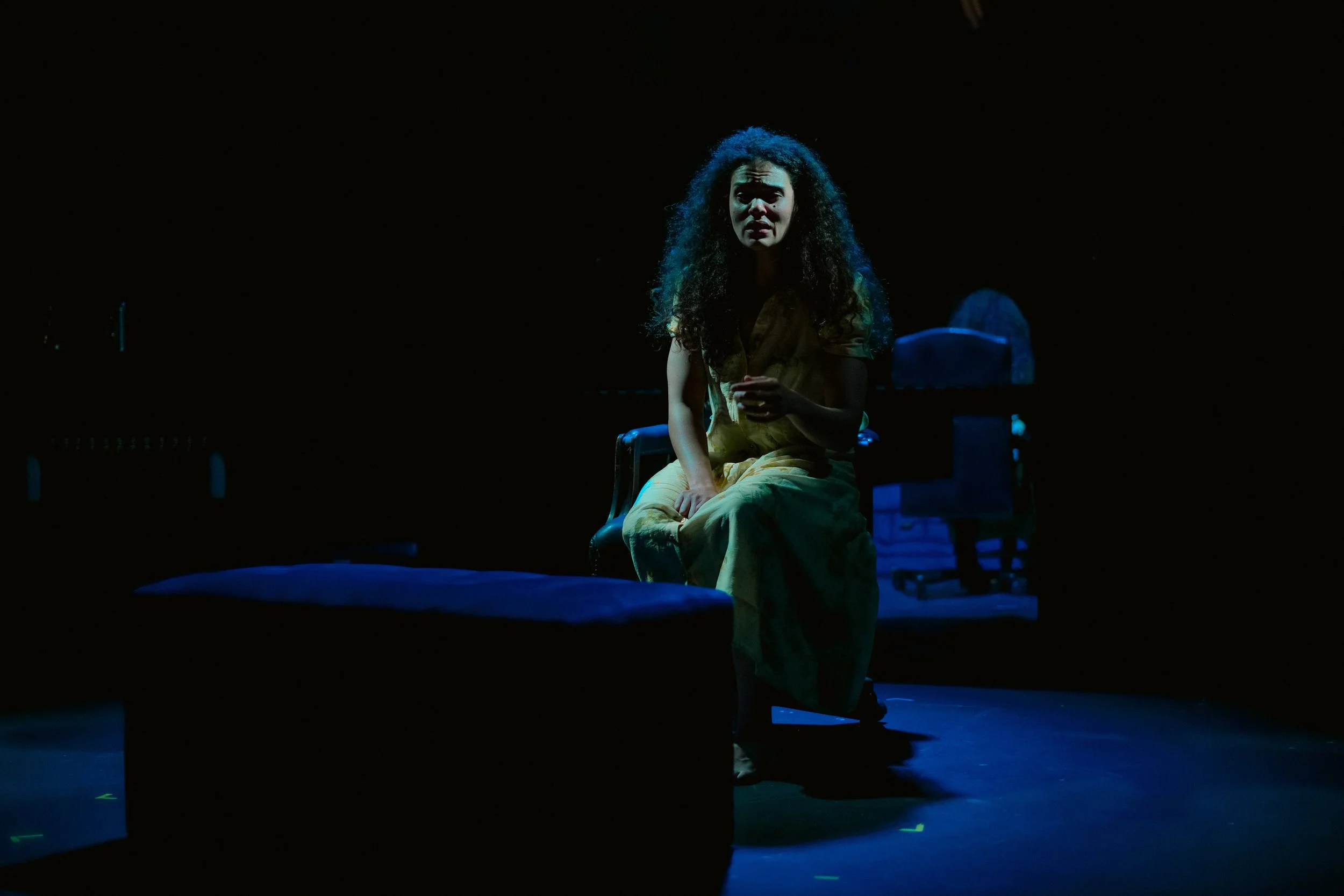
Photo: Quaid Jones
Why the system fails the people it claims to protect
And those arguments matter. What Prima Facie does better than almost anything I have seen on this subject is dramatise, rather than simply explain, why our legal systems struggle so badly with sexual violence. Courts want coherence. They want a version of events that holds together cleanly under pressure, dates and details that line up, a witness who can recount trauma with the same steadiness she might use to describe a contract dispute. But memory under that kind of duress does not work that way. Fear and shock scramble sequence and detail. Trauma resurfaces in fragments, often years later, shaped as much by what the mind has done to survive as by what actually happened. A legal system built on the presumption of innocence, which is right and necessary in principle, becomes something else entirely when it is applied to evidence that was never going to arrive in a tidy, linear form to begin with. The result, as the play lays bare with real precision, is that a great many guilty men walk free not because the evidence was wrong, but because it did not fit the shape the law demands.
This is not a comfortable thing to watch unfold over two hours. It is not meant to be. But there is a difference between discomfort that shuts an audience down and discomfort that opens something up, and Prima Facie belongs firmly to the second category. It left me quieter than most nights at the theatre do, and considerably more inclined to keep thinking about what I had just seen on the drive home.
I do not say this lightly: this is a production worth making time for, whatever the subject matter costs you to sit with. It is hard-hitting theatre in the truest sense, difficult to shake and, I suspect, harder still to forget. At a moment when South Africa is once again reckoning publicly with how badly we fail survivors of violence, a play this precise about exactly where that failure lives feels less like entertainment and more like an obligation. Go and see it.
Prima Facie runs at the Market Theatre until the 4th of October 2026.